
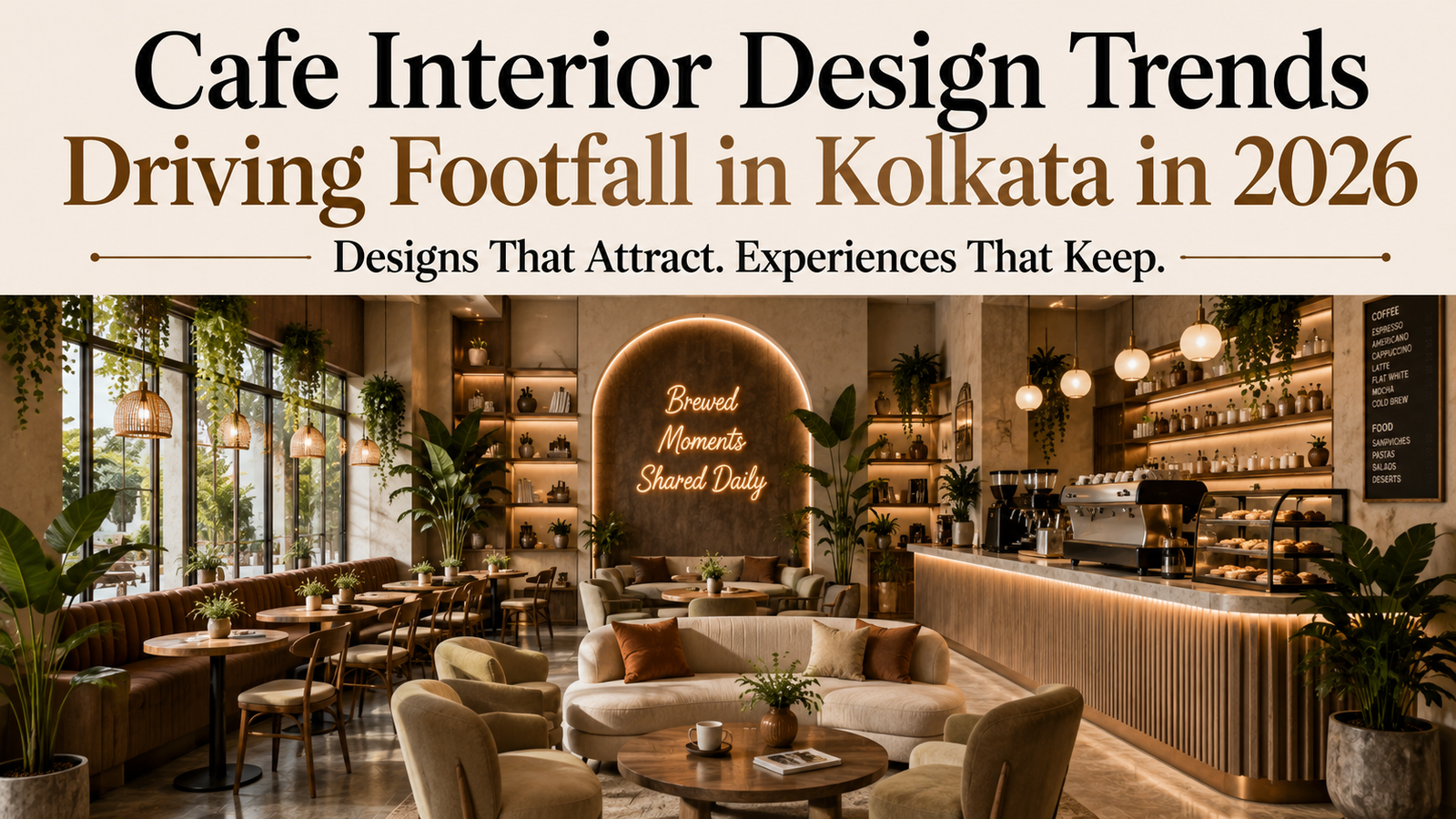
Quick summary: In 2026, cafe interior design in Kolkata is moving away from purely Instagram-driven aesthetics toward functional, sensory-led spaces — hybrid zones for remote work and socialising, warm natural materials over cold industrial finishes, layered ambient lighting, and authentic design details rather than forced “photo wall” moments. Cafes that get this balance right are converting footfall into longer visits and repeat customers.
Walk through Park Street, Gariahat, or the newer cafe strips in New Town, and it’s obvious that Kolkata’s cafe culture has changed. A cafe today isn’t just competing on coffee quality — it’s competing on how a space makes people want to stay, work, meet, and come back. And increasingly, the interior design is doing as much heavy lifting as the menu.
For anyone searching “cafe interior design Kolkata” or planning a new coffee shop interior design project, here’s what’s actually driving footfall in 2026 — and what’s quietly becoming outdated.
Why Cafe Interior Design Matters More Than Ever in Kolkata
The “third place” concept has evolved
Cafes have long been described as the “third place” — somewhere that’s neither home nor work. In 2026, that idea has split into something more specific: cafes now need to serve two very different customer types in the same space, often at the same time.
Two distinct customer tribes to design for
- The Digital Nomad — laptop-based, staying for hours, needs quiet, power access, and comfortable seating.
- The Express Commuter — in and out quickly, needs a fast, efficient counter experience and grab-and-go seating.
Designing a single space that serves both well, without either group feeling out of place, is one of the defining challenges in cafe interior design today.
1. Purpose-Built Zones Instead of One-Size-Fits-All Seating
Deep work zones
Cafes are increasingly carving out quieter corners specifically for remote workers — banquette seating positioned away from high foot-traffic areas, with built-in or easily accessible power outlets and USB-C ports so cables don’t trail across walkways.
Social and conversational zones
Separately, cafes are designing more open, communal seating — larger tables, softer lounge-style furniture — positioned nearer the entrance or window, where energy and visibility matter more than quiet focus.
Why zoning increases footfall and dwell time
When a cafe successfully separates these needs, customers self-select into the right zone, which reduces friction (laptop users blocking tables meant for quick coffee runs) and makes the space feel intentional rather than accidental — a detail that keeps people coming back.
2. Warm, Natural Materials Are Replacing Cold Industrial Finishes
The shift away from “sterile industrial”
The exposed-duct, polished-concrete, metal-stool aesthetic that defined coffee shop interior design for the last decade is fading. In its place: warmer materials that make longer stays feel comfortable rather than stark.
Materials leading this shift in Kolkata cafes
- Engineered wood and large-format terracotta tiles for flooring
- Cane, rattan, and wood for seating and light fixtures
- Textured plaster or lime-wash walls instead of flat paint
- Greenery used generously, not as an afterthought
A local layer worth leaning into
Kolkata cafes have a genuine opportunity here that’s often underused — incorporating Bengal’s own craft language (terracotta detailing, handwoven textiles, local pottery) into what would otherwise be a fairly generic warm-industrial look. It’s a way to make a cafe feel distinctly Kolkata rather than interchangeable with a cafe in any other city.
3. Lighting Designed for Mood Transitions, Not Just Function
Why dimmer control matters more than people expect
A cafe’s energy needs to shift through the day — bright and efficient during the morning commuter rush, warmer and more relaxed by evening. Designing lighting on separate, dimmable circuits, rather than a single flat overhead scheme, is one of the highest-value and most overlooked investments in cafe interior design.
Layered lighting in practice
- Ambient lighting for general illumination
- Task lighting over work and counter zones
- Accent lighting to highlight textures, art, or feature walls
4. Authentic Moments Over Forced “Instagram Walls”
Why the neon-sign wall is losing relevance
A few years ago, most new cafes leaned heavily on a designated “Instagram wall” — neon slogans, oversized wings, forced photo backdrops. In 2026, customers are more drawn to spaces that feel genuine rather than staged.
What’s replacing it
Instead of one engineered photo spot, well-designed cafes are creating several naturally beautiful corners throughout the space — good lighting, an interesting chair, a well-placed plant — and letting customers discover and photograph what genuinely appeals to them, rather than directing them to one manufactured moment.
5. Acoustic Design Is Becoming a Real Consideration
Open layouts, hard flooring, and high ceilings — all popular for their look — can make a cafe uncomfortably loud once it fills up. More cafe interior design projects in Kolkata are now factoring in acoustic treatment early: soft furnishings, textured wall panels, and strategic layout choices that absorb sound rather than bounce it around a hard-surfaced room.
6. Cafe Type Should Shape the Design Language
Not every cafe should look the same, and one of the more common mistakes in cafe interior design is applying a generic “trendy cafe” template regardless of concept. A few common cafe types and how their design logic differs:
| Cafe Type | Design Priority |
|---|---|
| Grab-and-go coffee counter | Fast circulation, minimal seating, efficient counter flow |
| Work-friendly hybrid cafe | Zoned seating, power access, acoustic comfort |
| Boutique/experience cafe | Curated corners, distinctive furniture, storytelling details |
| Quiet reading/reflection cafe | Soft lighting, secluded seating, muted colour palette |
A cafe interior designer’s first job is identifying which of these (or which blend) a space is actually meant to be — before any material or layout decision gets made.
What This Means If You’re Planning a Cafe Interior in Kolkata
- Define your customer mix before designing seating — a cafe trying to serve everyone equally often ends up serving no one particularly well.
- Invest in lighting circuits early, not as a finishing touch — it’s one of the cheapest ways to control mood throughout the day.
- Don’t skip acoustic planning, especially in open, hard-surfaced layouts.
- Let a few genuinely well-designed corners exist, rather than manufacturing one forced photo wall.
Bringing These Trends Into Your Own Cafe
Every cafe concept — and every available space in Kolkata, whether it’s a compact New Town unit or a heritage-building ground floor near Park Street — comes with its own constraints and opportunities. These trends work best when adapted to the specific footprint, footfall pattern, and brand identity of the cafe, not copied wholesale from what’s trending elsewhere.
This is where working with a team that understands both current design language and the practical realities of running a Kolkata cafe makes a genuine difference. At Kairoz Interior, cafe projects start with understanding how the space actually needs to function — service flow, seating mix, peak-hour behaviour — before any material or layout decision is finalised, because the cafes that consistently drive footfall are the ones designed around real customer behaviour, not just current aesthetics.
If you’re planning a cafe interior design project in Kolkata and want a space that balances current design trends with practical, footfall-driving functionality, Kairoz Interior can help translate that concept into a working layout from the very first conversation.
Frequently Asked Questions
The shift toward purpose-built zones — separating quiet, work-friendly seating from social, high-energy seating within the same cafe — is currently the most significant trend, as it allows a single space to serve different customer needs effectively.
Warm, natural materials such as engineered wood, terracotta, cane, and textured plaster are replacing the cold industrial look of exposed concrete and metal, creating a more inviting environment for longer customer stays.
Not in the way they used to. Instead of one forced photo backdrop, current design favours several naturally well-designed corners with good lighting and interesting details, letting customers discover their own favourite spot to photograph.
Lighting on dimmable, layered circuits allows a cafe’s atmosphere to shift from bright and efficient during the morning rush to warm and relaxed in the evening, directly affecting how long customers choose to stay.
A well-designed cafe interior increases dwell time, encourages repeat visits, and creates a stronger brand impression, all of which directly influence both foot traffic and average spend per visit.
Yes. Small cafe interior design typically prioritises efficient circulation and multi-purpose furniture, while larger cafes have more flexibility to create distinct zones for different customer types and activities.
Look for a designer who starts by understanding your cafe’s concept, customer mix, and service flow rather than applying a generic template — the best cafe interiors are designed around how the space will actually be used, not just how it will look in photographs.
